

Bark Cloth
97-120-703A
From: Polynesia | Society Islands | Tahiti
Curatorial Section: Oceanian
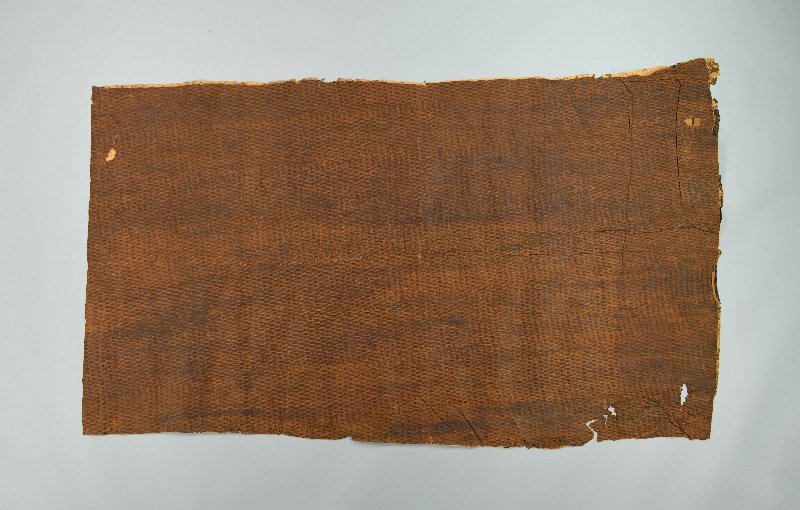


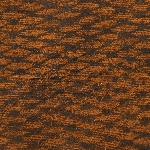
| Native Name | Tapa |
| Object Number | 97-120-703A |
| Current Location | Collections Storage |
| Culture | Tahitian |
| Provenience | Polynesia | Society Islands | Tahiti |
| Culture Area | Oceania | Polynesia |
| Section | Oceanian |
| Materials | Bark Cloth | Pigment | Glaze |
| Description | A red-brown bark cloth (tapa) made of the inner bark of a tree. The bark cloth consists of two layers of cloth, one red-brown, the other black and oiled for waterproofing. A patterned bark beater was used in its production, leaving visible markings in the cloth. The pattern is similar to the Hawaiian bark-cloth beater pattern, hoopai halua (parallel lines intersecting at right angles). The surface decoration consists of a series of black net patterns with dots at the intersections. Bark cloth is produced from the inner bark of a tree, typically paper mulberry (Broussonetia papyrifera), which is cultivated, harvested, and processed through soaking, scraping, fermenting, and repeated beating to form and refine the cloth. Patterned beaters may be used during production to create watermarks that can reflect regional styles or maker affiliations. Bark cloth was utilized in a variety of ways across Oceania, primarily for practical applications such as clothing and bedding. Beyond these utilitarian functions, it also played an important role in ceremonial contexts, including funerary practices and formal exchange presentations. |
| Length | 166 cm |
| Width | 102 cm |
| Credit Line | Gift of the Academy of Natural Sciences of Philadelphia, 1997 |
| Other Number | L-120-703A - Old Museum Number | 4444 - ANSP Number |
Report problems and issues to digitalmedia@pennmuseum.org.