

Bark Cloth Sample
Sleeping Cloth Fragment
97-120-416
From: United States of America | Hawaiian Islands | Hawai'i | Ka'u | Kalaiki
Curatorial Section: Oceanian


| Native Name | Kilohana | Kapa |
| Object Number | 97-120-416 |
| Current Location | Collections Storage |
| Culture | Hawaiian |
| Provenience | United States of America | Hawaiian Islands | Hawai'i | Ka'u | Kalaiki |
| Culture Area | Oceania | Polynesia |
| Creator | Ahuole of Kalaiki |
| Section | Oceanian |
| Materials | Pipturus albidus Bark | Bark Cloth | Candlenut |
| Technique | Beaten |
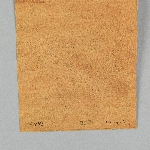
| Description | A rectangular sample of kilohana (decorated outer sheet) bark cloth, made of mamaki eleuli (Pipturus albidus). The bark cloth has been dyed brown with the use of kuikui (candlenut tree). The sample was removed from a kapa moe (bed covering) measuring approximately 6 x 7 feet, present at the Bernice Pauahi Bishop Museum. The kapa is referenced in William T. Brigham’s Ka Hana Kapa. A patterned bark beater with a hoopai (parallel lines with sharp edges) motif was used in its production, leaving visible markings in the cloth. Kapa cloth is produced from the inner bark of a tree, typically wauke (paper mulberry), which is cultivated, harvested, and processed through soaking, scraping, fermenting, and repeated beating to form and refine the cloth. Patterned beaters may be used during production to create watermarks that can reflect regional styles or maker affiliations. After drying, the cloth is decorated using natural dyes and bamboo implements. Kapa moe, used as bedding, was made with particular attention to thickness and durability to withstand repeated use, washing, and sun-drying. From the eighteenth century onward, European collectors and scholars frequently collected kapa, often removing small samples from larger textiles to facilitate transport, study, and comparison in museum and private collections, a practice especially common during and after Cook’s voyages in the Pacific. |
| Length | 23 cm |
| Width | 15 cm |
| Credit Line | Gift of the Academy of Natural Sciences of Philadelphia, 1997 |
| Other Number | L-120-416 - Old Museum Number | 10495 - ANSP Number | 2370 - Bishop Museum Number |
Report problems and issues to digitalmedia@pennmuseum.org.