

Cloak
29-58-155
From: United States of America | Hawaiian Islands
Curatorial Section: Oceanian



| Object Number | 29-58-155 |
| Current Location | Collections Storage |
| Culture | Hawaiian |
| Provenience | United States of America | Hawaiian Islands |
| Culture Area | Oceania | Polynesia |
| Date Made | 19th Century |
| Section | Oceanian |
| Materials | Feather | Plant Fiber |
| Technique | Featherwork |
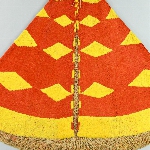
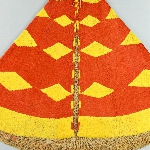
| Description | Hawaiian feather cloak (ʻahuʻula), constructed of bundles of yellow, red, and black feathers attached in overlapping rows to a netted olona-fiber foundation. The cloak is predominantly red, with a broad yellow border along the lower edge and repeating yellow diamond motifs across the surface. Feather cloaks and capes (ʻahuʻula) were important symbols of rank and sacred power in Hawaiʻi. Worn by high-ranking chiefs (aliʻi), they expressed chiefly authority, divine ancestry, and mana (spiritual power). Often worn with feathered helmets (mahiole), they were used during warfare, ceremonies, and other ritually significant occasions. ʻAhuʻula were labor-intensive objects produced within systems of ritual restriction (kapu). Their olona-fiber foundations were carefully netted, and the valued red and yellow feathers contributed to the garments’ political and sacred significance. By the nineteenth century, feather cloaks had become prominent forms of chiefly regalia and visual displays of status before traditional featherwork production declined with the collapse of the Hawaiian chiefly system. |
| Length | 138 cm |
| Width | 272 cm |
| Credit Line | Purchased from W. O. Oldman, 1921 |
Report problems and issues to digitalmedia@pennmuseum.org.